

I found myself in an intimidating position last May - standing before a classroom of Kindergarteners (my precocious daughter among them) leading a design thinking workshop. Design thinking is a passion of mine. One of my core values is learning (it’s a reason I keep finding myself in growth roles: you’re only going to grow if you’re willing to learn).
Days before I had agonized over the syllabus for my 45 minute session. How might I provide a meaningful introduction to design thinking? Could I devise a group activity for them to prototype something? How might I make it interactive? What’s appropriate for Kindergarteners? Would they cooperate for discussion or brainstorms? Is it even possible to introduce design thinking to Kindergarteners?
At the beginning of the school year the teacher gave each parent a chance to sign up for a slot to teach something to the class. I jumped at the opportunity to share design thinking. My primary goal was to expose my daughter’s class to a way of thinking that I believe has the potential to help the kids across a variety of challenges.
I embrace this thinking at home and ever since my daughter (and younger son) were able to talk I have strived to teach them to take a design thinking approach to problem solving (without calling it such). For instance, rather than solving a problem for them, I ask them for ideas on how they think the problem could be solved, then (if safe) allow them to try out those ideas to see for themselves which ones work. Once I even ran a little brainstorm and dot-voting session to help us choose a family movie (Frozen won).
My parental approach is not unique. Parents today are encouraged to empower their kids by fostering independence and critical thinking (see Dr Becky). This means giving children opportunities to make choices, solve problems, and express their opinions and emotions. In this philosophy mistakes are celebrated as long as parents and kids are able to talk through them and learn from the experience.
Note: this echoes my current work at PagerDuty where my team builds tools to help our customers learn from their technical mistakes.
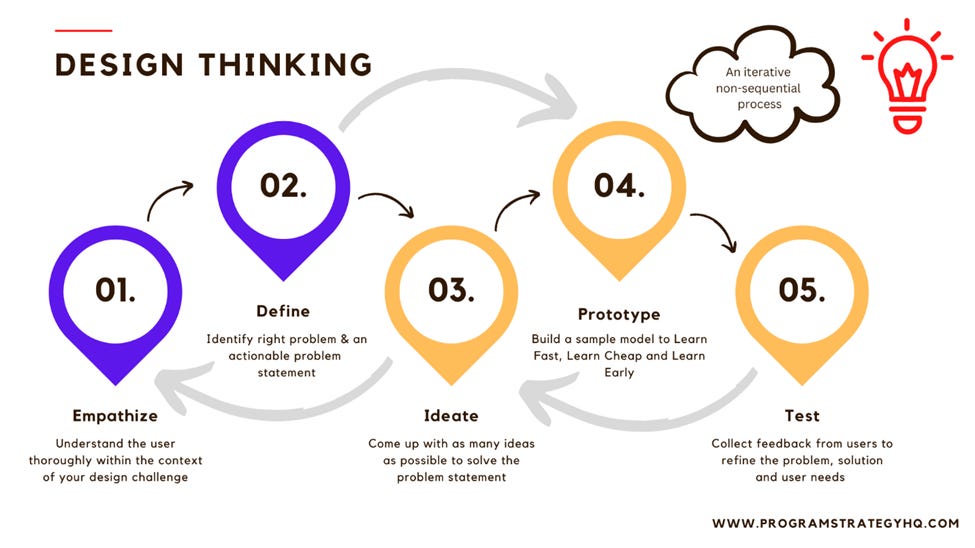
This parenting approach relates a lot to the design thinking process, which is not a linear workflow and emphasizes learning at every stage. This learning could easily lead someone to realize an understanding they had was incorrect, an idea they championed might not work, etc. Design thinking celebrates those learnings as long as they are applied to iterations that ultimately create a stronger solution.
In addition to parenting approaches this even comes out in pop culture. Loto, a canoe builder (and innovator), illustrates the design thinking ethos perfectly in the song “What Could be Better Than This?” from Moana 2:
Technically speaking, perfection's a myth
Even though the journey's epic, something better could exist
But that's why I'm always designing, aligning
Combining ideas, and always refining
I'm a real bright thinker and a genius when I tinker
With a love of problem-solving as a model canoe sinker
We're failing fantastically, yes, we're a mess
And we're messing up drastically, falling on your face is the best
If you do it wrong, then you run another test

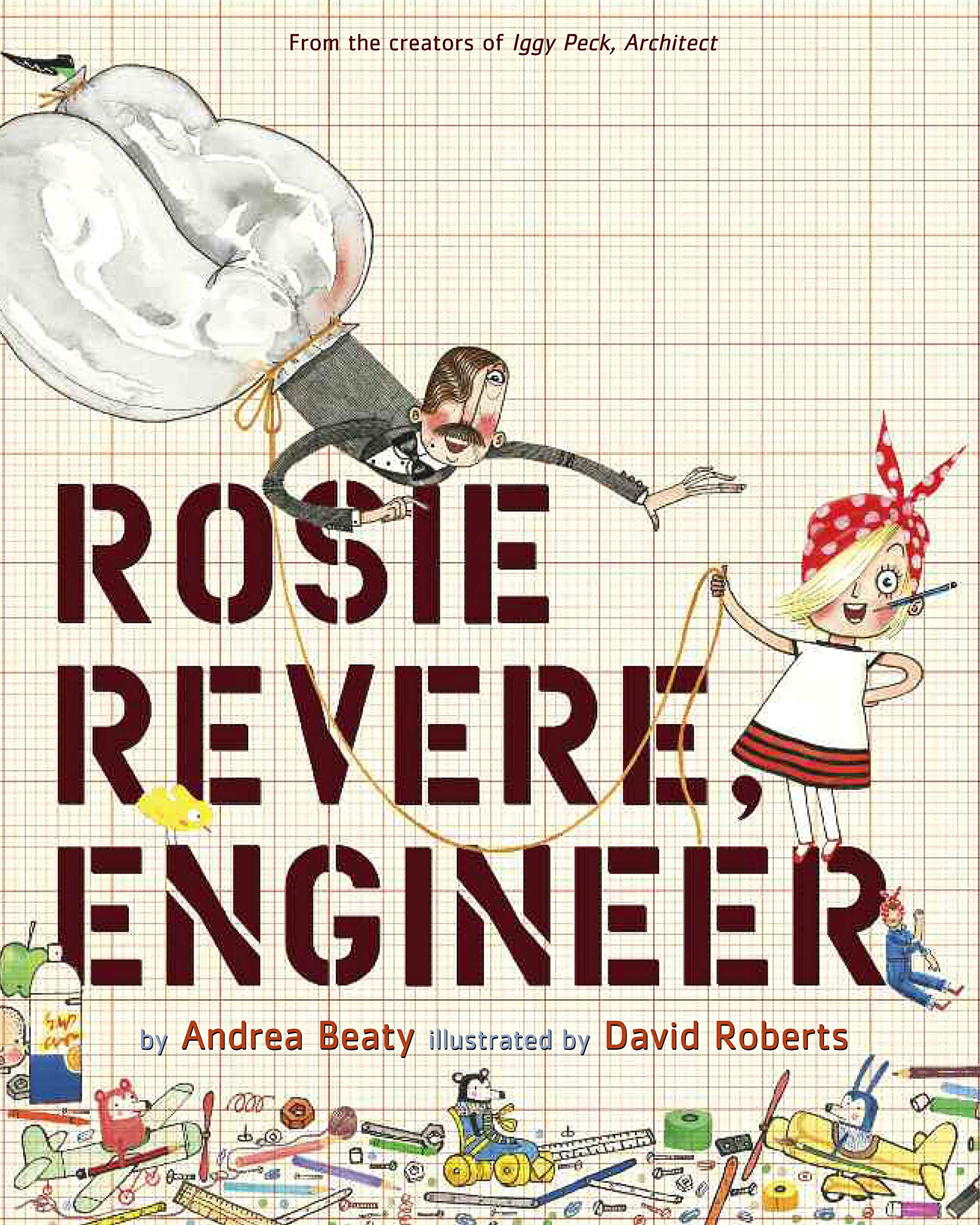
For my daughter’s class I settled on focusing on the first three phases of design thinking: empathize, define and ideate. I brought in the book Rosie Revere, Engineer by Andrea Beaty and started the workshop off by reading the story to provide an overview, set the context and ease the kids into the topic. I used Rosie as an example to showcase how she identified and empathized with a problem (her great aunt had never flown), ideated on ways to get her great aunt flying, tested, learned and iterated on those ideas. This quote from the story sums it up:
“Your brilliant first flop was a raging success! Come on, let's get busy and on to the next!" She handed a notebook to Rosie Revere, who smiled at her aunt as it all became clear. Life might have its failures, but this was not it. The only true failure can come if you quit.”
After reading and discussing Rosie Revere with the class I led the group in one of my favorite design thinking exercises, Crazy 3s (modified from Google Design Sprint’s Crazy 8s). I wanted the kids to experience the unshackled freedom of broad idea generation (no bad ideas in a brainstorm). The problem I posed to them was that their teacher was having a birthday and we needed to plan her party.
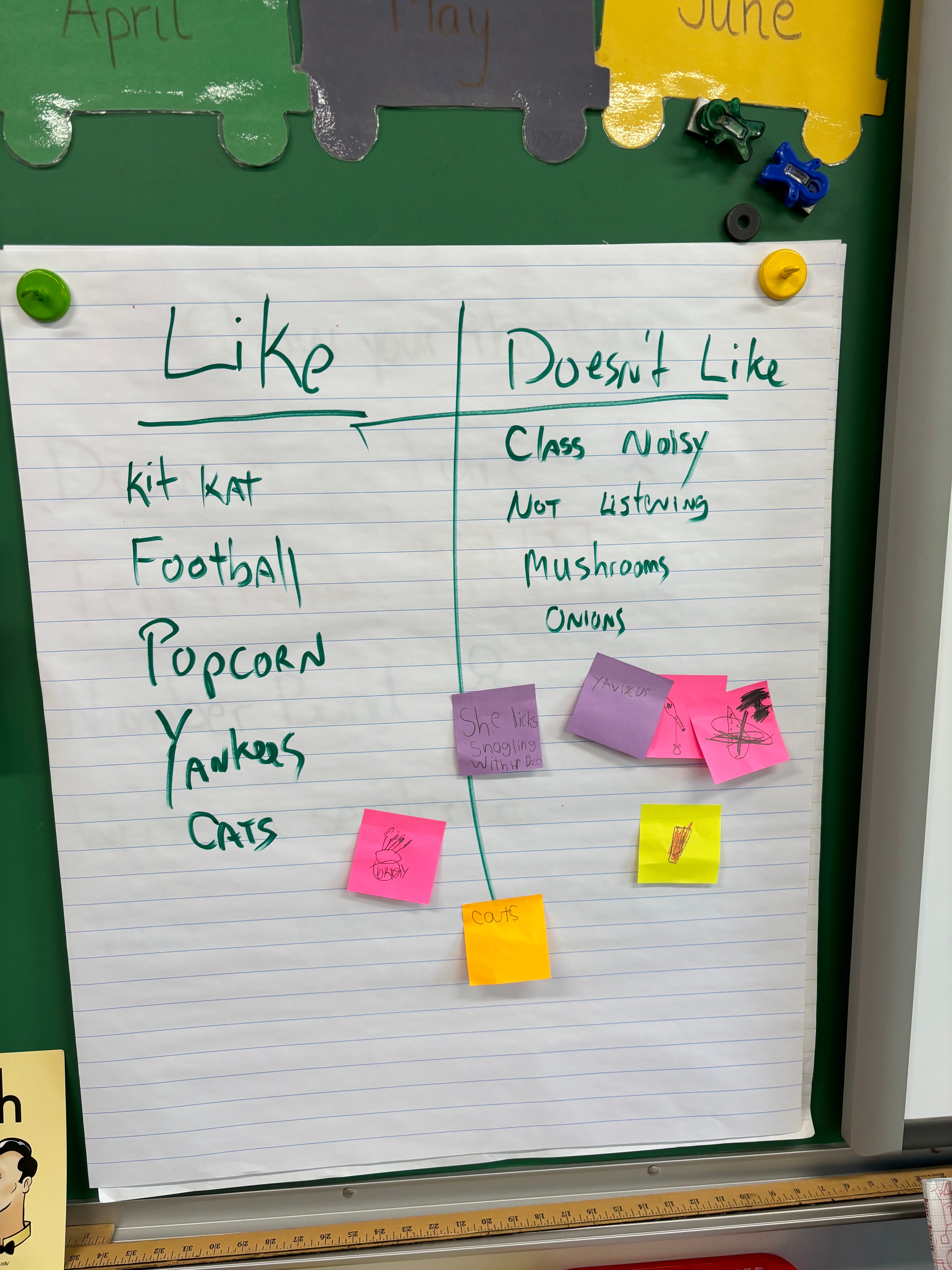
To warm us up and help the kids build empathy I began by asking them to identify things that their teacher likes and doesn’t like. “The Yankees!”, “Kit Kats”, “Popcorn!” and other notes all came out. I made a list of those “likes” and “don’t likes” on the board.
To get the class going on Crazy 3s I had prepared sheets of paper divided into thirds. The kids would have 6 minutes to write or draw 3 ideas onto the paper. I prompted them with “how we might plan the best birthday for their teacher that keeps her likes and don’t likes in mind?”
On the face of it 2 minutes seems like a lot of time for 1 idea (the original Crazy8s is supposed to be 1 minute per idea). This exercise serves a few purposes. It stresses your mind to race through zaney (or workable) ideas and get them down on paper in writing or sketching. Also, because it is an individual exercise it levels the playing field between introverts and extroverts and ensures that even the shyest kid will still have an opportunity for their idea to come to life.
We wrapped up by reviewing the ideas, identifying ideas that had similar themes and ideas that resonated with their teacher’s needs for her birthday. It was impressive to some of the thoughts that came out from the kids - they embraced the idea of thinking about their teacher, her passions and how they might apply those to create a birthday party. Suggestions included “a popcorn machine” “invite the Yankees!” and other more practical ideas like “a cake without mushrooms”.
It was a fun experience leading this workshop and I hope to do it again in a 1st grade classroom this spring. As I think about that upcoming workshop I’m going to keep in mind these reflections - how the ethos of design thinking aligns with current parenting philosophies and is echoed in children’s pop culture. How might I take what I’ve learned here and iterate to create an even more engaging experience for my daughter and her class?
PS. Here is a link to the syllabus - feel free to use, iterate, and leave feedback!
Great insights for bringing real world work into the new generation and observing how they respond and react. It's never too early to model how we give ideas a try, evaluation and try it again.