Nine months ago, I joined Personio’s smallest office: the NYC outpost of Germany’s largest startup. In October, most of my NYC colleagues and I were laid off and now I’m starting another new adventure.
It was a short chapter at Personio, but in that time I learned a lot about myself, product craft and culture. Here are 3 short lessons I’m carrying forward.
👋 Hey, I’m Alex. I write Shipping on Fridays to explore the craft of how great products get built and what we can learn from the people behind them. I publish 1–2x a month, and every post is meant to be fun, useful, and a little unexpected; from design sprints to sailing races to holiday chaos. If you’re into learning, product or design, this is for you.
Lesson 1: Ask the Uncomfortable Questions
When I started on the Activation team, morale was low. The Engineering Manager had just left with no backfill planned. An engineer was stuck on a large project that had been labeled “engineering-led,” which in practice meant all the product and design decisions got punted.
In our 1:1s, his frustration poured out. He was demotivated, spinning cycles and unclear on what success even looked like.
What I wanted to do was to avoid conflict, wave a magic product wand of buzzwords and frameworks to make the symptoms go away. I had enough to keep myself busy.
But I’d been here before and my instincts were screaming at me to not make the same mistake. At a previous startup, low morale undermined the roadmap and led to attrition (including my own). I knew that avoiding the hard conversations wouldn’t make the problems disappear, it would probably make them worse.
So I leaned into what felt uncomfortable: for every frustration I heard, I tried to dig deeper and understand the root cause.
I also knew I shouldn’t try to be a solo-hero. Together with another team member, we ran team retrospectives to capture pain points and brainstorm possible solutions. We documented all of this on a Trello board and assigned people to next steps. As a team we also agreed to treat our ways of working as experiments. Try a new team process, measure if it felt better, keep it or scrap it and try something new. Above all, be open to change, new ideas from teammates and feedback.
The changes that emerged weren’t revolutionary, but they were concrete:
Our staff engineer carved out time each week for pairing sessions and project check-ins
We broke large projects into iterative milestones tied to clear success criteria and customer problems
All project discussions (even 1:1 questions) moved to public Slack channels to democratize information
Over time, team morale shifted as we experimented with these (and other changes). Trust grew and we started gaining a reputation as a team that ships (although never on a Friday 😎).
For me, the biggest shift was personal. I faced a conflict I once would’ve dodged, leaned into discomfort and opened myself up to feedback and change.
Lesson: When something feels off, dive in. Treat your team processes just like your product - a living entity up for constant iteration, experimentation and growth.
Lesson 2: Empowerment with Accountability Wins
At Personio, I was empowered to prioritize anything I felt would help us hit our goals. No approval checkpoints or micromanagement. This also isn’t revolutionary, many companies empower individual product teams this way.
The difference was that my managers at Personio built a strict system of accountability to go with this empowerment.
Every couple of weeks we had a product review where my team met with cross-functional leadership (product director, design director, eng director). Every month we had SteerCo meetings where we presented to our C-suite sponsor. For Activation, that was the COO.
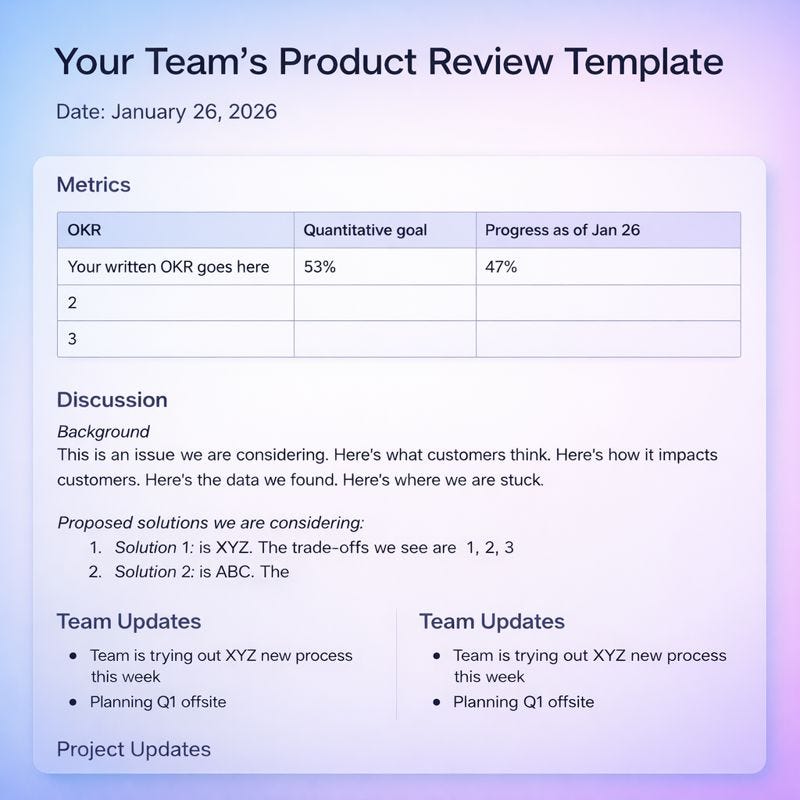
This was a structure for self-driven accountability. The agenda for these meetings and what I shared was largely up to me (again, emphasizing independence and empowerment), but each meeting always started with the metric I was responsible for driving. My mentor created a Product Review Agenda format that I shamelessly copied (you can too!). This doc included sections for metrics, team updates, project updates, and discussion topics. I sent out the document ahead of time so that all the update sections could be covered async. Then the meeting itself focused on discussion topics and questions people had raised in their comments.
What made this work was the cadence. Two weeks isn’t long enough to hide mediocre prioritization. You can’t spend a month building something fluffy and hope no one notices. These frequent check-ins create accountability without stripping away autonomy.
The structure at Personio pushed me to get ruthless about prioritization. My managers would consistently ask:
Would you still prioritize this if you knew it was the last thing your team could build? Ha!
Is this solving the problem that keeps customers awake at night?
Are we addressing a deeply held concern or building a nice-to-have?
I’ve written before about these questions (see posts about the re-org question and solving the deepest customer problem). What I hadn’t fully appreciated was how the structure of accountability reinforced them. The questions were embedded in our process.
Many orgs set OKRs, let teams run and it is empowering. But without regular check-ins, it’s easy to drift as nice-to-haves and pet projects creep in. This, in turn, can lead to teams who miss OKRs despite looking productive all quarter.
Lesson: Build in process (like Product Reviews) to pair empowerment with accountability so that your work truly drives your metric and improves life for your customer.
Lesson 3: Culture Doesn’t Need Stability to Thrive
Even as layoff rumors ghosted about, our NYC office stayed warm and collaborative.
The office also had a culture committee that organized lunches, demos, Mario Kart tournaments, and the occasional party. Most days we’d eat lunch together at a long bench table, jumping between work problems and which Broadway show to catch next (the consensus was Oh Mary!). The culture committee was also open if people came up with their own events to build community.
One of our senior engineers started a weekly coffee walk. Anyone free would grab a cup at Black Fox (yummy, but expensive!) and stroll the High Line or chat in Hudson Yards. The best part was how organically it started. One Thursday he posted in our office slack channel asking if anyone wanted to grab coffee. He repeated this a few times then eventually upped the formality with a standing calendar invite.
Another afternoon, a teammate hosted a volunteer event for Heart of Dinner, an org that delivers hand-decorated care packages to elderly Asian Americans in NYC. Our job? Decorate the bags. It was a small, tactile break from laptops and a big reminder of what community looks like in action.

When the office closed, the culture didn’t disappear. NYC ex-Personios still meet for happy hours and hikes. One engineering leader kicked off a weekly interview prep call and created a Slack community. When someone lands a new role, we all celebrate.
Lesson: You’re empowered to change culture. Don’t be afraid to start small rituals like coffee walks or in-office volunteering - it all builds community.
Fin
It’s tempting to measure a job by its duration. But Personio proved that some of the best lessons come from the shortest chapters.
I leaned into hard conversations I once would’ve avoided. I learned what empowerment paired with accountability actually looks like in practice. And I saw what a thoughtful culture can create, even during uncertainty.
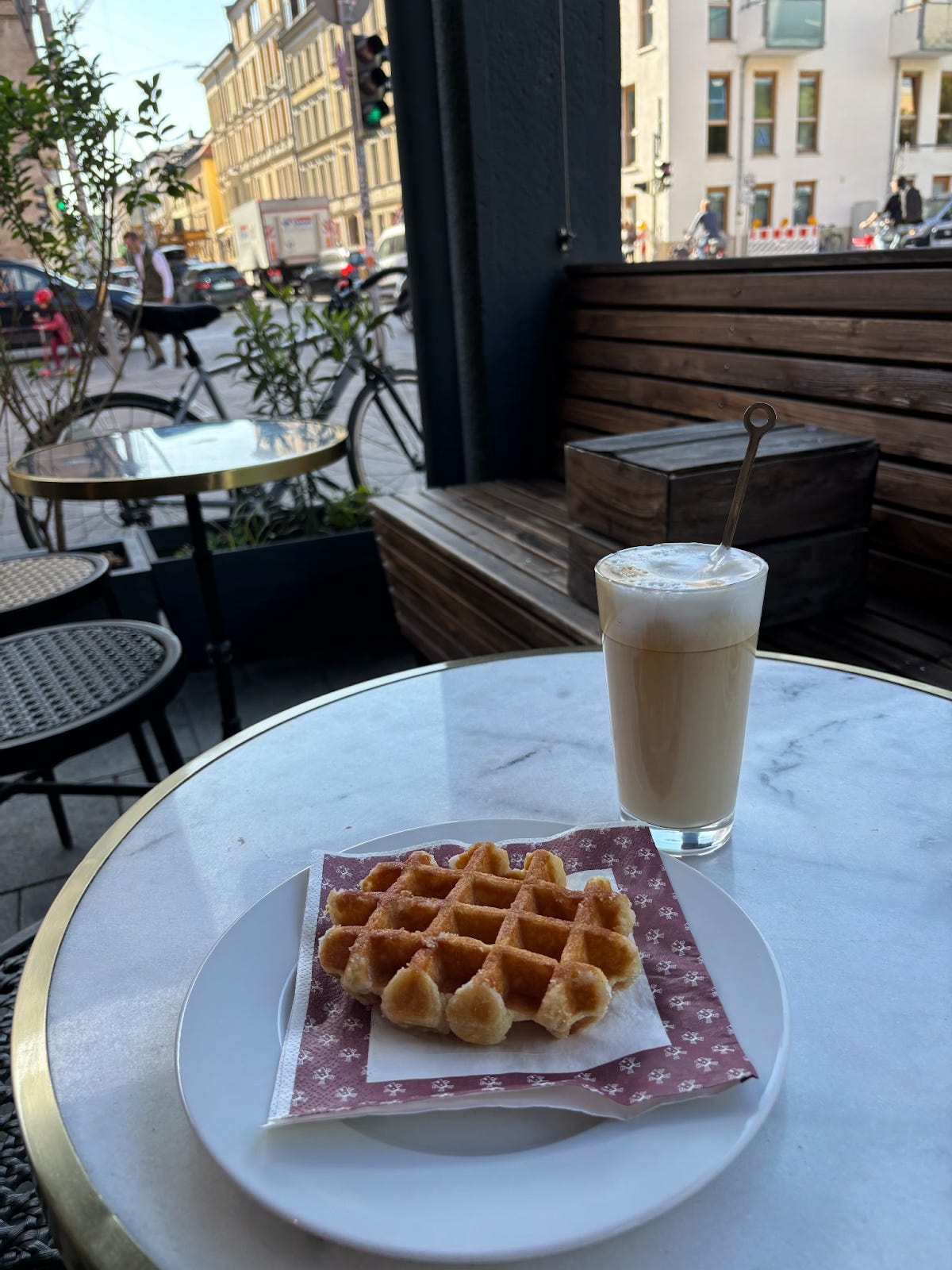
I even got to visit Munich twice (although never for Oktoberfest - which, I learned, actually takes place in September). By the second trip, I could confidently order coffee in German.
Auf wiedersehen, Personio. Onward!